
High-Performance Embedded System Design with the Microchip ATSAME70Q20B-AN Cortex-M7 MCU
The relentless demand for greater computational power, connectivity, and efficiency in embedded applications has driven the adoption of high-performance microcontrollers. At the forefront of this movement is the Microchip ATSAME70Q20B-AN, an ARM Cortex-M7 based MCU engineered for applications where performance and reliability are non-negotiable. Designing a system around this powerful component requires a deep understanding of its capabilities and a strategic approach to leverage its full potential.
The core of the ATSAME70Q20B-AN's prowess is its 300 MHz ARM Cortex-M7 processor, which incorporates a double-precision floating-point unit (FPU) and a highly efficient signal processing extension. This architecture is a significant leap over previous Cortex-M generations, delivering DSP-level performance and making it exceptionally suitable for complex control algorithms, real-time data processing, and advanced graphical interfaces. The MCU's 512 KB of tightly coupled memory (TCM) provides deterministic, zero-wait-state access for critical code and data, ensuring that high-speed processing is not bottlenecked by memory latency.
Connectivity is a cornerstone of modern embedded design, and the SAME70 excels in this domain. It features a comprehensive set of peripherals, including Gigabit Ethernet with AVB support, dual CAN-FD controllers, multiple UARTs, SPIs, and I2Cs. This rich integration allows designers to create centralized systems that communicate seamlessly with various sensors, actuators, and network infrastructures, reducing the need for external communication chips and simplifying the overall board design.
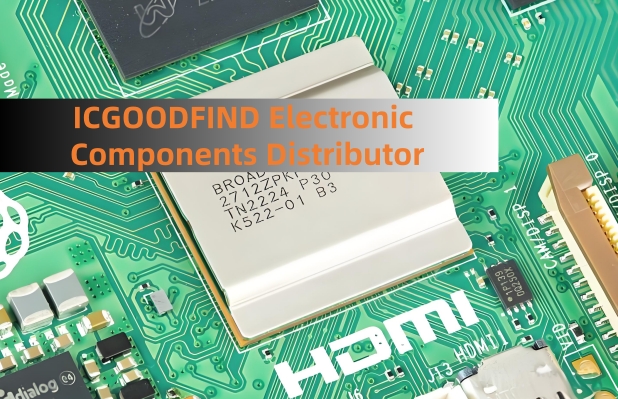
For applications requiring robust human-machine interaction (HMI), the microcontroller integrates a dedicated LCD controller capable of driving displays with up to XGA resolution. This, combined with its high computational power, enables the creation of sophisticated graphical user interfaces (GUIs) with smooth animations and responsive touch controls without a separate graphics processor.
Managing this level of performance necessitates a focus on power efficiency and security. The device incorporates advanced power-saving modes, allowing designers to create energy-efficient systems that dynamically scale performance to meet operational demands. Furthermore, built-in security features such as a hardware encryption engine, secure boot, and memory protection units (MPU) provide a critical foundation for protecting intellectual property and ensuring system integrity in connected devices.
The design process for such a high-performance system extends beyond the MCU itself. A successful implementation hinges on a robust hardware design with proper power supply decoupling, signal integrity for high-speed interfaces, and thermal management. On the software side, developers must leverage efficient programming practices, potentially utilizing an RTOS to manage the complex interplay of multiple tasks and peripherals, fully harnessing the multicore-like capabilities of the Cortex-M7 pipeline.
In conclusion, the Microchip ATSAME70Q20B-AN represents a pinnacle of integration and performance in the Cortex-M microcontroller realm. By effectively leveraging its high-speed processing, extensive connectivity, and advanced peripherals, engineers can architect next-generation embedded systems for demanding applications in industrial automation, automotive, aerospace, and professional audio/video equipment.
ICGOODFIND: This article highlights the ATSAME70Q20B-AN as a top-tier solution for complex embedded designs, emphasizing its raw processing power, integrated peripherals, and the system-level considerations necessary for a successful high-performance implementation.
Keywords: Cortex-M7, High-Performance, Embedded System, Connectivity, Real-Time Processing.

